
Incremental Space Sandbox | Indie Game Autopsy
A short breakdown of some learnings from Incremental Space Sandbox.
This is a short blog post breaking down some awesome little games I’ve found on the internet. What do I love about them? What do I think could be done a little differently? I am primarily doing this for my own learning, but my hope is that other developers can learn something too, whether they agree or disagree, while also giving more small games some exposure.
Incremental Space Sandbox
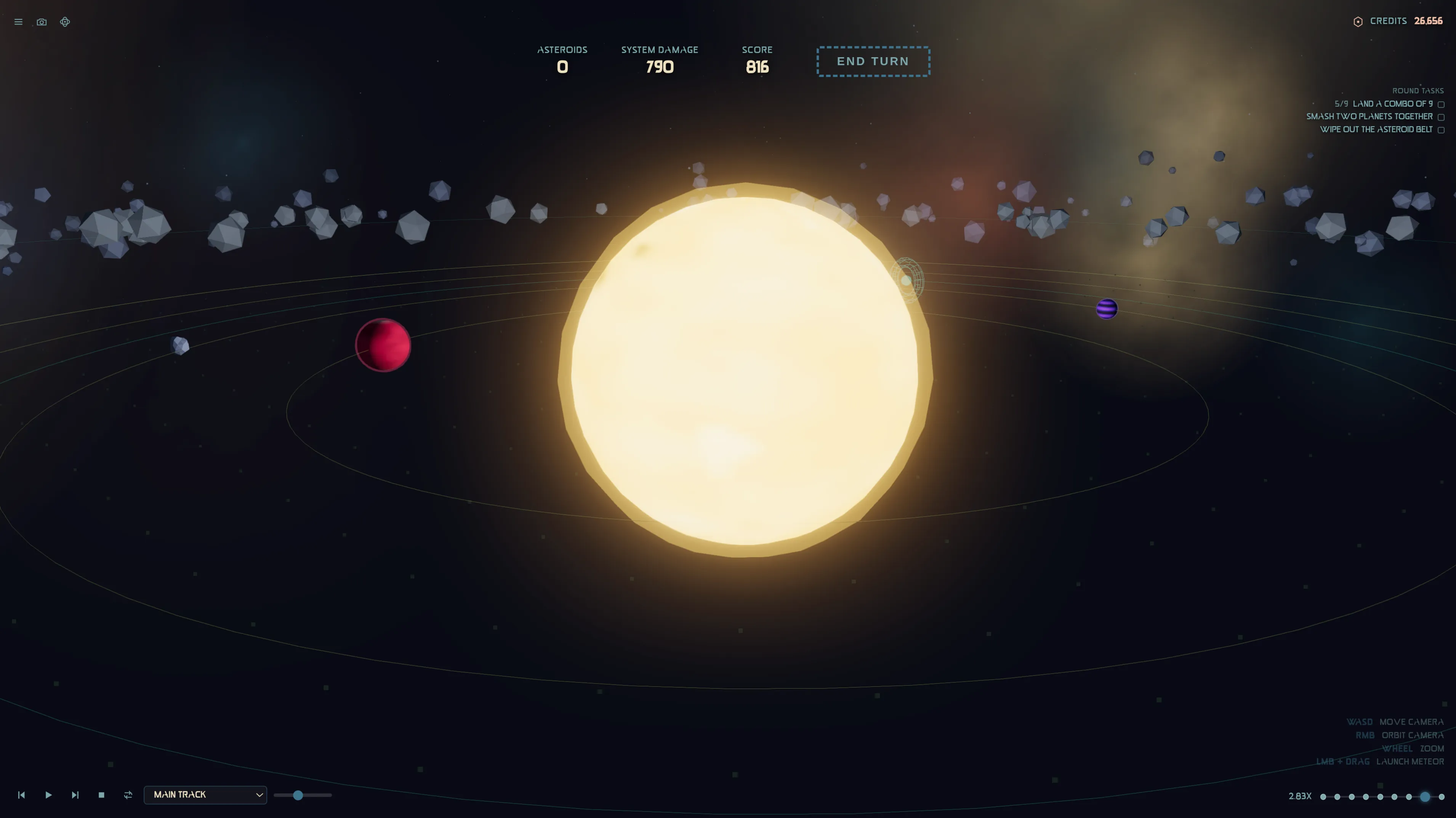
Incremental Space Sandbox is a classic incremental game where you throw asteroids and planets around solar systems to destroy worlds. Its demo is currently available on itch.io, and you can wishlist it on Steam - please do! It is still early in development, so keep that in mind when reading this. It’s all subject to change!
The Loop
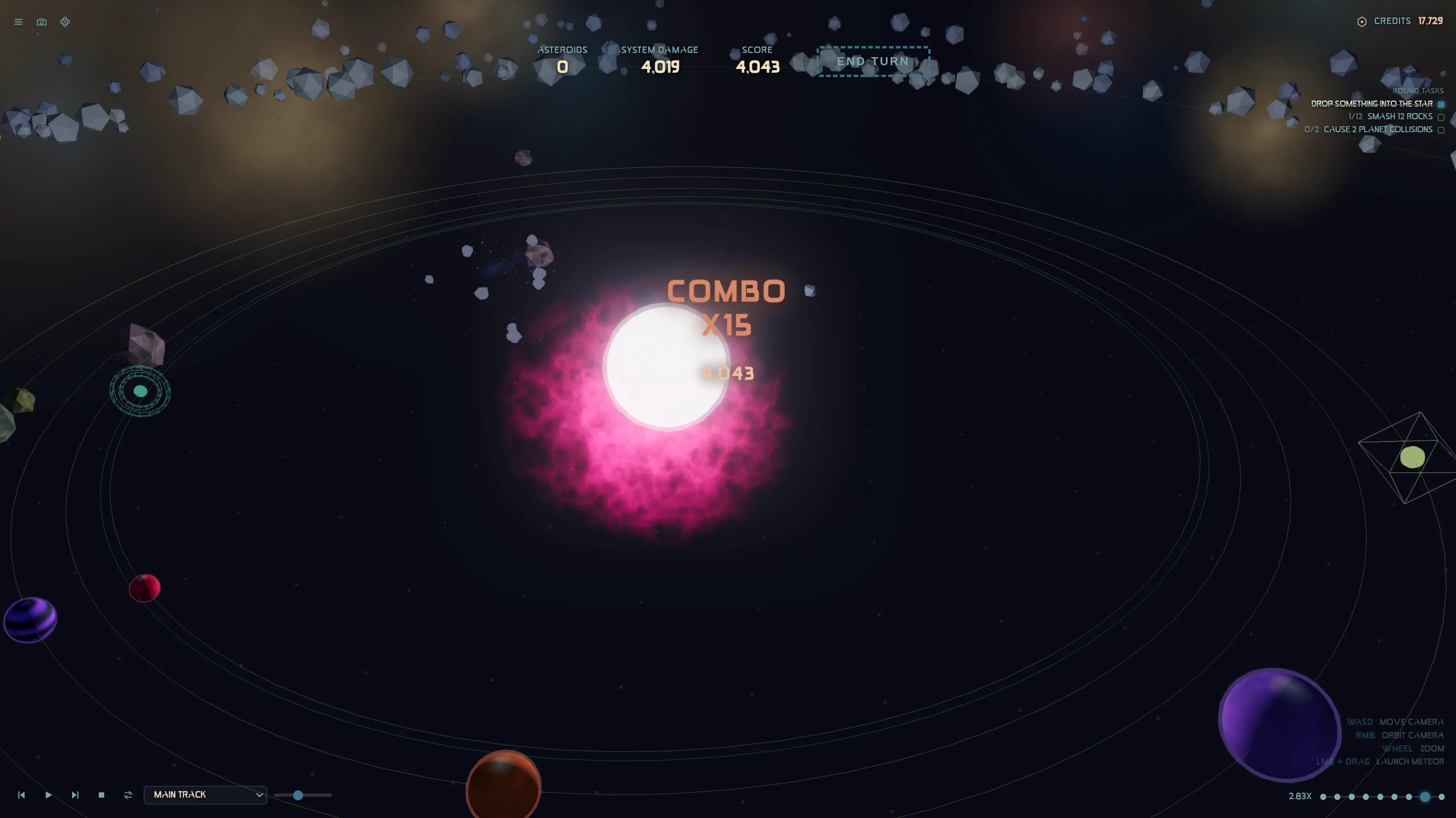
The player needs to throw asteroids around a solar system to cause as much damage as absolutely possible. The asteroids bounce around, popping and exploding, running into other planets - all while following the laws of gravity and elastic banding around each other.
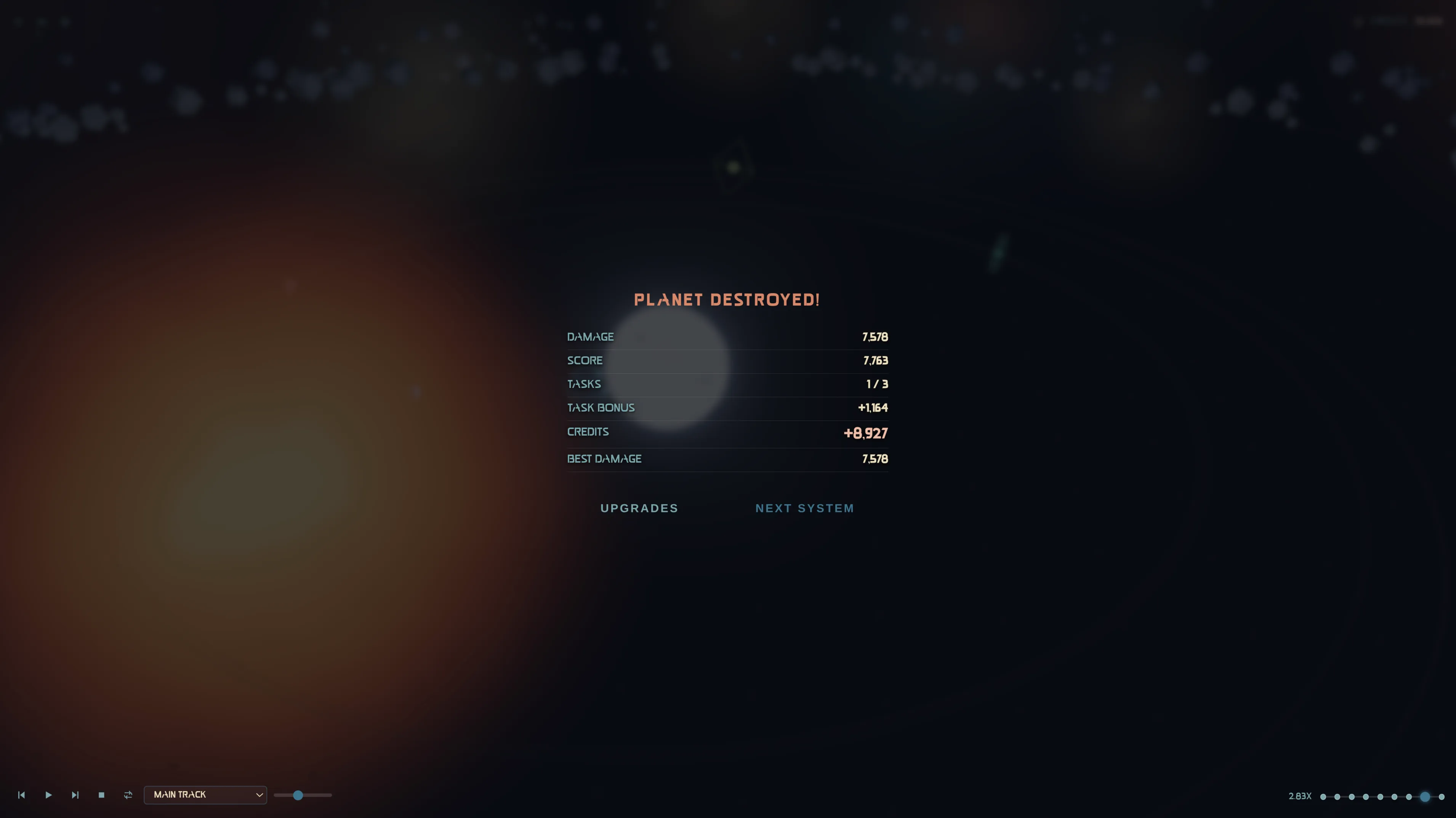
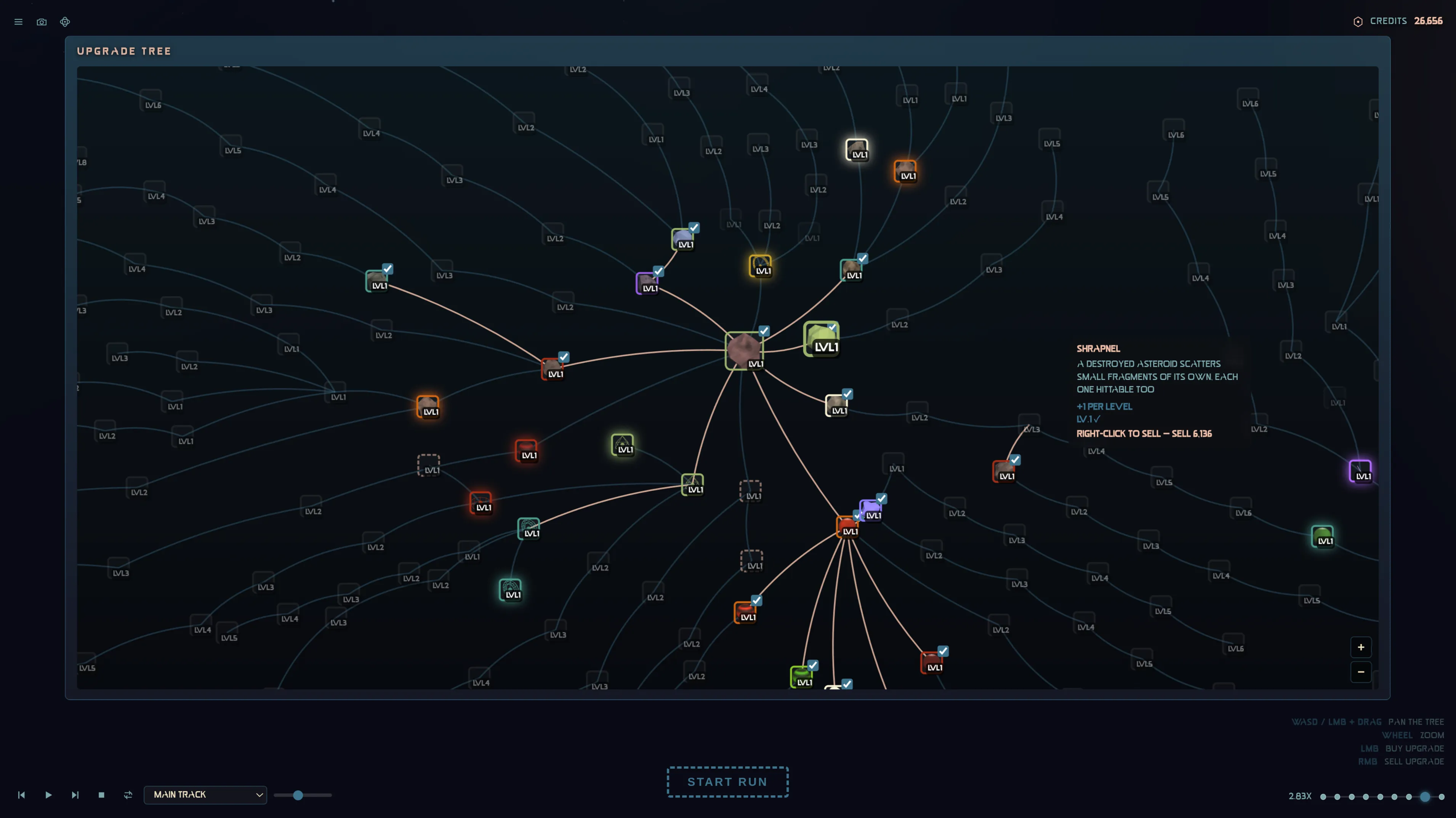
Then you use the credits earned from doing this to buy a huge array of upgrades, before coming back to cause even more destruction.
It really plays on getting the most out of such small player interactions. I love firing off the asteroids and watching the chaos unfold. This is a great “marble drop” kind of interaction that incremental games can riff on hard.
More Rewards Please
An important aspect of game design is something sometimes called “reward schedules”. Currently, Incremental Space Sandbox’s loop has, mostly, a single reward loop. You gain credits, wait until you have enough, then spend them.
To make a game more interesting, you can play around with these reward loops, particularly by introducing reward loops on different schedules. One common way incremental games do this is with a second or third currency type. So your constant reward is credits, but then, in between earning credits, you’ll get the chance to earn other currencies and buy different upgrades. The further apart these reward loops are, the more impact they should have. Then you can have these really high-impact, but rarer, rewards, with the tighter credit loop filling the space in between.
This was a big one for us in Incremental Heist. We originally only had cash as a resource, but ended up introducing “Bot Parts” for more impactful upgrades. I felt like it immediately added a bunch of interest.
Different reward cadences give incremental games texture. Frequent rewards keep the player moving, while rarer rewards create anticipation and punctuate progression. Play with this idea and see how you can introduce different reward cadences.
The Brain Tickles
We should all keep an eye out for moments like this in our own games. If you’re running playtests, look for when your testers light up - even if it’s only subtle. These moments are often created by something unexpected. They should link to other systems in your game that immediately get the player’s brain racing with ideas about how this new and unexpected thing will interact with those systems.
Gravity
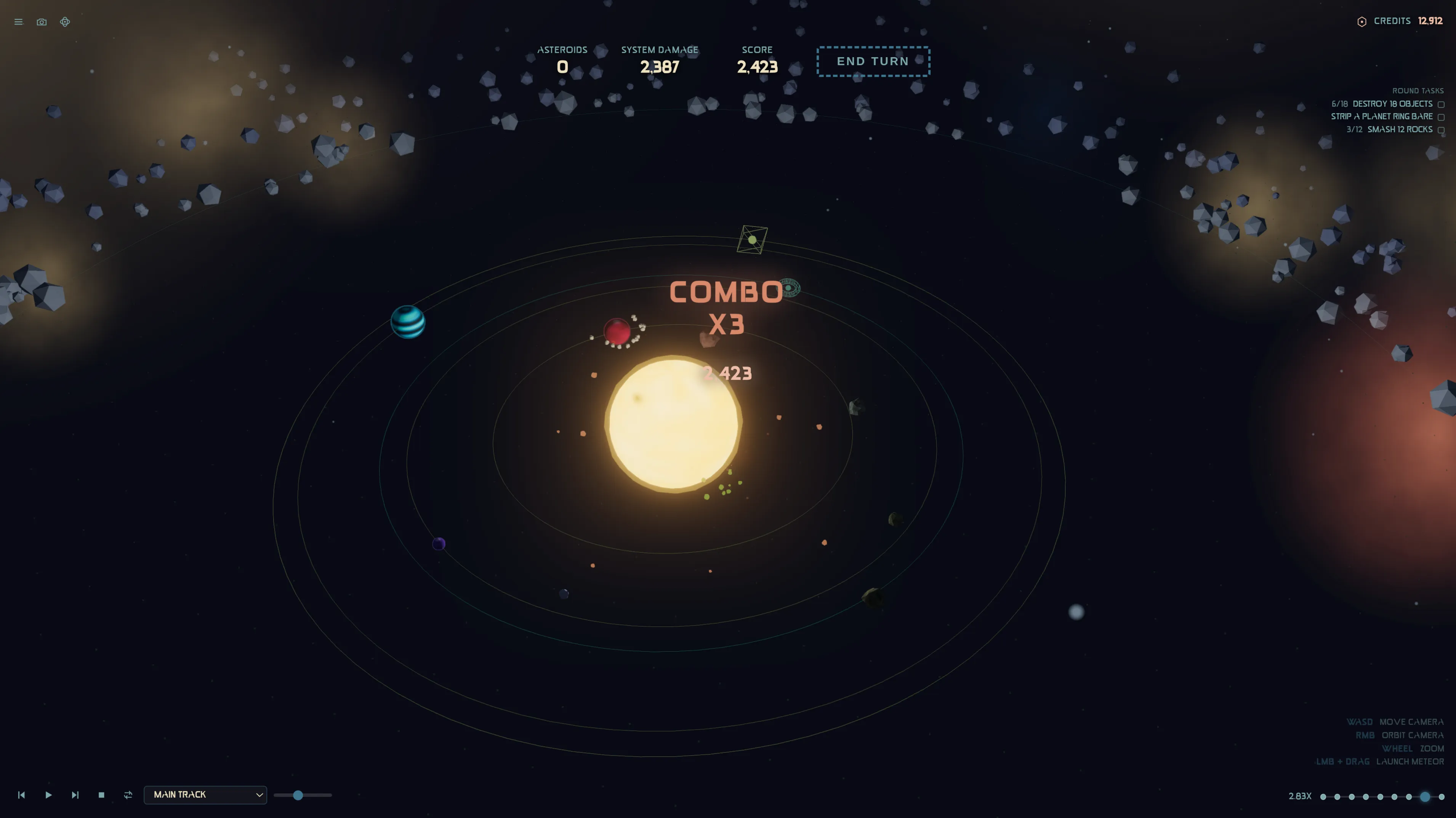
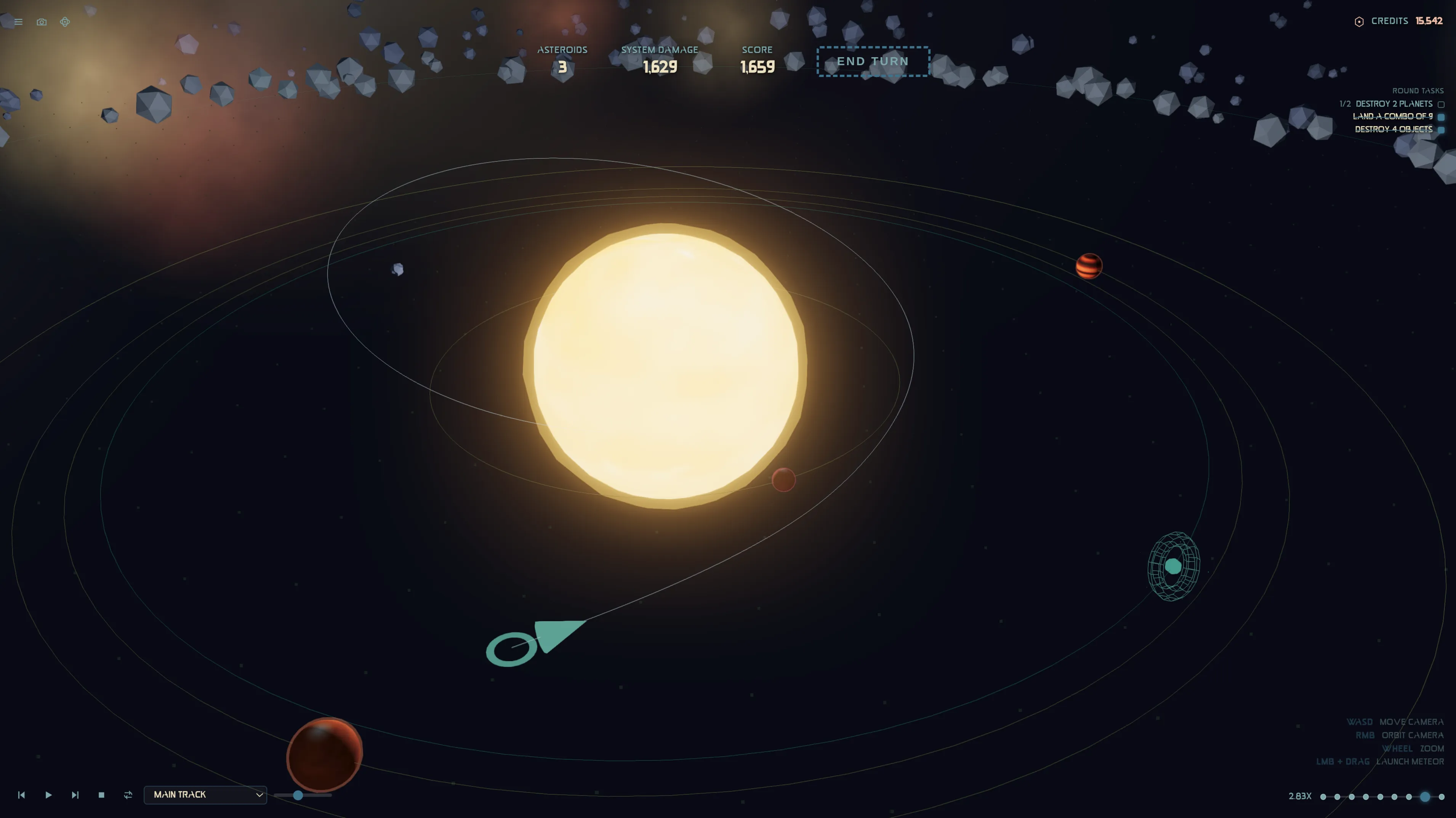
When you first start the game, you are told to hold left-click and pull the mouse to launch an asteroid. You do that, and you notice the little aiming line appear where your mouse is. Pretty standard. Then you move it a bit. What’s that? It’s bending around the planets!
This immediately tickled my brain. I thought: What chaos will ensue when I launch this thing? How will the upgrades interact with this? How far will this game push this?
The Degenerate Strategy
Something I learned from Tynan Sylvester’s game design book - I can’t remember where he learned it from - is that we need to be on the lookout for degenerate strategies that undermine all our hard design work.
I’ve noticed that throwing the asteroids as hard as you can seems to be the best strategy. You launch them balls-to-the-wall fast and watch them bounce everywhere. This is entertaining in its own right, but it seems to almost completely negate the gravity brain tickle for me. I no longer need to carefully look at the trajectories and watch how the gravity simulation plays out.
If your optimal strategy bypasses one of your most interesting systems, the reward structure may be working against the design.
Can we regenerate the gravity?
A possible solution might be to remove the outer asteroid belt and let the asteroids fly away, ending the round when they do. This also helps fix another problem: once your points start slowing down, the optimal strategy is to simply end the round manually. Quite often, the asteroids can also get stuck bouncing around and hitting nothing - this would fix that too.
Conclusion
I had a blast playing this game. The gravity simulation and “marble drop” gameplay are a solid foundation to build on. I’m looking forward to seeing where the developer takes it. I’ll be back to smash planets to pieces.